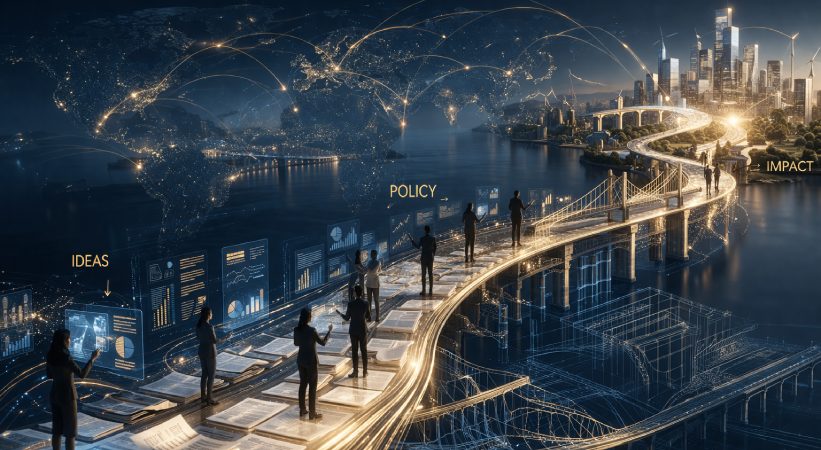
The process of ideas becoming law, raw research turning into the foundations of policy, and creating frameworks for communities, and at a larger scale, countries to thrive together is a process of lengthy dialogue, learning, and collaboration. Policies must be created through careful deliberation, with respect to the urgency of an issue or problem. Naturally, there are cases where near immediate responses are called for, which just means the mobilization of practical information and thought has to be a lot quicker.
The significance of practical policy dialogue lies in the ends policymakers seek to achieve. Localized problems with no longstanding impacts or scalable effects can be solved easier, and possible without extending resources or requiring a time consuming solution. But scaling up, there are issues that can impact more jurisdictions, potentially spread a lot further, and require interdisciplinary solutions, creating a need for dialogue that is not just mindful, but leans on collaboration from different fields and industries. This is the art of the dialogue, and how it is essential to withstand the complexities of wide reaching, highly urgent, or simply global issues.
Platforms for Discussion
Just like any other conversation, these dialogues need the appropriate setting. It can range from government officials talking about geopolitical issues behind closed doors, to the environmental activists who want a collaborative discussion in broad daylight, in the hopes they can raise attention to pressing matters and perhaps challenge policymakers to push for a change. Context is everything, and then there are the groups involved to consider. Academic theories often demand dialogue between researchers, teachers and scientists, with a high level of understanding key to making meaningful discussion.
A workshop to advocate equal rights or raise awareness for social issues does not require the same specialist knowledge and insights. It appeals to our base human needs, sympathy, and feeling of community. The application of the platforms is also key to understanding how the dialogue is conducted. Some are designed to educate and bring everyone up to speed on specific challenges. Others are more action leaning, with policymakers discussing responses to different scenarios, where negotiation and compromise is key.
Global Conferences and Summits
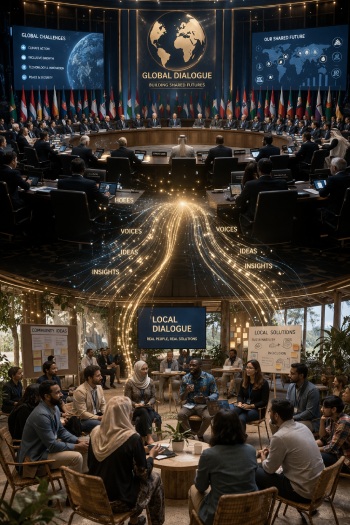
Summits are platforms where world leaders, including heads of state, regulators and leaders within different industries, can come together to talk about the most important issues in the world. They are moreover global conferences that do not just address local or regional challenges. The summits act as a forum for the world leaders, where they can directly ask questions of their peers, challenge existing policies on pressing matters, and hopefully work to find solutions for the future.
They must be structured, focusing on predetermined agendas and the leaders prepare for these well in advance. These require extensive research planned way ahead, so that the discussions can be relevant and meaningful, with the intent of moving forward to find a compromise and plan responses. Industry experts and professionals may also attend summits to clarify terms or referenced ideologies, but in theory, the speakers must be fully prepared to talk about virtually any aspect of the obstacles ahead.
It ends with a public facing statement, or broadcast, which communicates the main points led by the heads of state, and how they intend to move forward. This is also a part of the dialogue, as it must be concise, factual, and win the confidence of outsiders who are largely impacted by any policy changes decided here.
Workshops and Localized Groups
At the other end of the spectrum, workshops are purposed for grassroots movements, local groups, and regional communities. These provide a direct channel for the communities to express their needs, and either unite together or have meaningful discussions on any divisive policies or aspects. It gives better clarity, creates collaborative knowledge, and allows participants to share their own lived experiences. These are key to finding solutions, challenge any assumptions, and bring everyone up to speed with the happenings and their impacts.
There is an experimental nature of workshops and localized group sessions. While important, these do not end with policy change or direct impacts on the upholding policies. Instead, they are held to find the motivations and aspirations of communities, whether it is inhabitants of select districts or a local network of entrepreneurs and business owners. The workshops can test new ideas, give the stage to more people, and create a better understanding on how the local communities react to existing and proposed policies.
Collaborative Forums
The most powerful aspect of collaborative forums is that they foster diversity. These are not global summits hosted for the world leaders or owners of giant corporations and influential figures. They are intended for anyone who wants to participate, with industry roundtables for tradespeople, public private partnerships and even multi stakeholder initiatives.
Voices from government, the academic world, private enterprises and even the general public can get involved. It works as one of the most important platforms to find solutions that satisfy more impacted parties, with wider perspectives. These can easily raise attention to major issues, and can give policymakers right at the top important metrics to study and analyze when gaining insights.
Structuring the Dialogue
Structure here refers to the timeline of the process, or the theoretical starting point to the end of the discussions. It also means the way these policy conversations are conducted, from what kinds of input are required to understand the field, to creating a common language and consensus on which policymakers can finally take action. The discussions are seldom brought up and solved in one sitting, and it can take a combination of the different platforms listed above to find the proper insights to make a decision.
Workshops and forums can paint a vivid picture of what the public, and insiders, want from any future policies. Points can be passed from that level up to key influential figures in the private sectors right up to the policymakers themselves, who can address the issue between themselves at cross border summits, global conferences, as well as within the localized parliament or congressional houses. Many issues will require academic input as well, adding facts, statistics, and important figures for policymakers to digest as they stew on what action should be taken.
Bringing the Relevant Research and Professionals
A strong foundation in evidence, facts, and proper analytics are essential to solving any problem. This is one of the pillars of policy discussions, as the relevant data must be compiled and analyzed for meticulous review. This helps clarify what is happening, and what is needed to overcome unwanted obstacles or negative impacts. Understanding the scope of the issue requires expertise. This comes from relevant studies, white papers, and research that is both credible and widely accepted.
Within the dialogue, the research must be openly shared and interpreted to every party present. Without this, it risks leaving out key members who could have good points or perspectives to challenge and inspire. Opinion does play an integral part of the resulting dialogue, but with enough research and a good foundational understanding, it becomes easier to filter biased opinions from those founded on subjective points.
Creating an Interdisciplinary Lingua Franca
A lingua franca is a term meaning a common language or vocabulary. One of the greatest hurdles that policy dialogue can encounter are the language barriers between different fields. For instance, terms and theory that an economics professor would understand, but an environmentalist or a people’s rights activist wouldn’t necessarily. Issues nowadays rarely hit one industry or field, and they may require academic research or professionals from multiple disciplines. These individuals can only collaborate if the platform for the dialogue establishes a structure and clear language.
It makes sure everyone can analyze the datasets, have access to the most technically layered or complicated systems, and be able to add their input to the discussions. Without a common language, it risks alienating certain groups or disciplines, which may be key to figuring out a harmonious solution. Or, without their voices, it creates an imbalance, potentially hitting that discipline negatively while positively shaping the other fields.
Weighing Scenarios and Options
Before a policy is finalized, the dialogue must shift toward scenario planning. Experts use predictive modeling and “what if” hypothetical analysis to stress test proposed solutions against various future conditions. Creativity is key to this, as these tests are experimental and speculative at best, but with the relevant data backing up the hypotheticals, they will not stray far from the real world realities.
This stage is crucial for identifying unintended consequences, allowing policymakers to weigh the trade offs between different options. They can then make the all important decisions, with the confidence that if there are negative impacts, these have been thoroughly analyzed and plans are put into place to mitigate them. Any policy dialogues that move from the legislative sessions to execution must be completely backed, and while potential amendments or fixes may be solvable, outright 180-degree shifts can lose trust and public confidence.
Responsible Decision Making
The dialogue culminates in a mutual understanding, a clear vision forward, and policymakers going through the legislative steps to make it happen. At this point, all the facts, what if scenarios, and potential outcomes must be out in the open, so the policymakers can weigh the risks for themselves and take accountability. They will need the evidential foundation and expertise from the discussions to rely on when they are called to justify their policies, or give public facing statements about why they are taking those actions.
However, unless the issues require very urgent and drastic action, taking responsible decisions does not need to mean making big irreversible decisions on the spot. There are many options here for policymakers, as they can introduce pilot programmes, call for additional research on specified topics, and even influence the private sector to make changes that do not necessarily need to become the law of the land. Finding out the best response at any given time is a responsibility in itself, whether that is urgent and costly fixes, or slow but thoughtful steps.
Regulatory Procedures to Implement Policies
Dialogue is meant to clarify problems, establish a base point for policy makers, and hopefully it ends when a confident course of action is determined. The conversations between policymakers on those specific topics will end, for the time being, on the problems when they form a consensus and take their proposals or bills to the congressional houses or through the appropriate legislative branches. The focus then shifts, with policymakers needing to win over their peers, captivate the public, and satisfy all partnered traders or private sector partners.
The dialogue, however, does not stop when action is taken. Far from it. This just changes the priorities, as lawmakers, insiders, and the general public who are impacted can all have meaningful discussions on the topics. This provides the insights and feedback to help policymakers uncover where they have triumphed, failed, and what can be done to improve any of the resulting impacts. Implementing policies only transforms the dialogue, after which the conversations take on different tones as action is taken.
Developing Local and Regional Plans
Once a policy direction is decided, it must be unpacked into actionable steps at the grassroots level. This is arguably the most straightforward of all policy changing actions, as there are fewer permissions to acquire, it doesn’t require oversight from higher up authorities, and they can be implemented in a fraction of the time as compared to nationwide plans.
Local implementation acts as the first real world test of a policy, revealing the logistical hurdles that only become apparent when theory meets practice. It is an important starting point for the larger nationwide and even international policy discussions. Moving up, regional plans serve as the building blocks for broader change, allowing for a phased approach that can be scaled up as successes are documented.
Nationwide and Domestic Policy Discussion
When it comes to making national policies, the action must consider the country’s legal architecture. In federal governments, like the one in the US, the procedures involve winning over the Congressional Houses, go through review by the members of the chambers, go to votes, and then final approval by both houses. In countries with Parliamentary houses, the process also involves approval by the house or houses of parliament. These are slower and lengthier procedures that will require rounds of debates, and possibly months of deliberation. It is about codifying the dialogue into law, ensuring that the changes are not just temporary fixes but permanent shifts in the country’s legislation.
National discussions also focus on the internal alignment of departments, ensuring that the Ministry of Finance and the Ministry of Environment, for example, are not working at cross purposes. It is here that the policy gains the full weight of the state’s enforcement and funding mechanisms. Though the more complex and layered the policy, the more research and expert insights are called for, often requiring more paperwork, authorizations, and hearings.
Taking Policies Internationally
The final step is the harmonization of domestic policies across borders. The goal is to make a unified global response, with heads of state joining forces to tackle problems together. This involves making treaties, establishing international regulators, and creating consistent legislation that doesn’t contradict or create friction with other countries. This way, compliance is more efficient, the responses are uniform and easier for the public to understand, and countries can stand on one front to combat pressing issues.
Taking policies international ensures that leakage doesn’t occur. For example, preventing one country’s strict environmental laws from simply driving pollution to a neighbor with weaker regulations. By closing these gaps, the global community creates a level playing field where progress in one nation supports the stability of all.